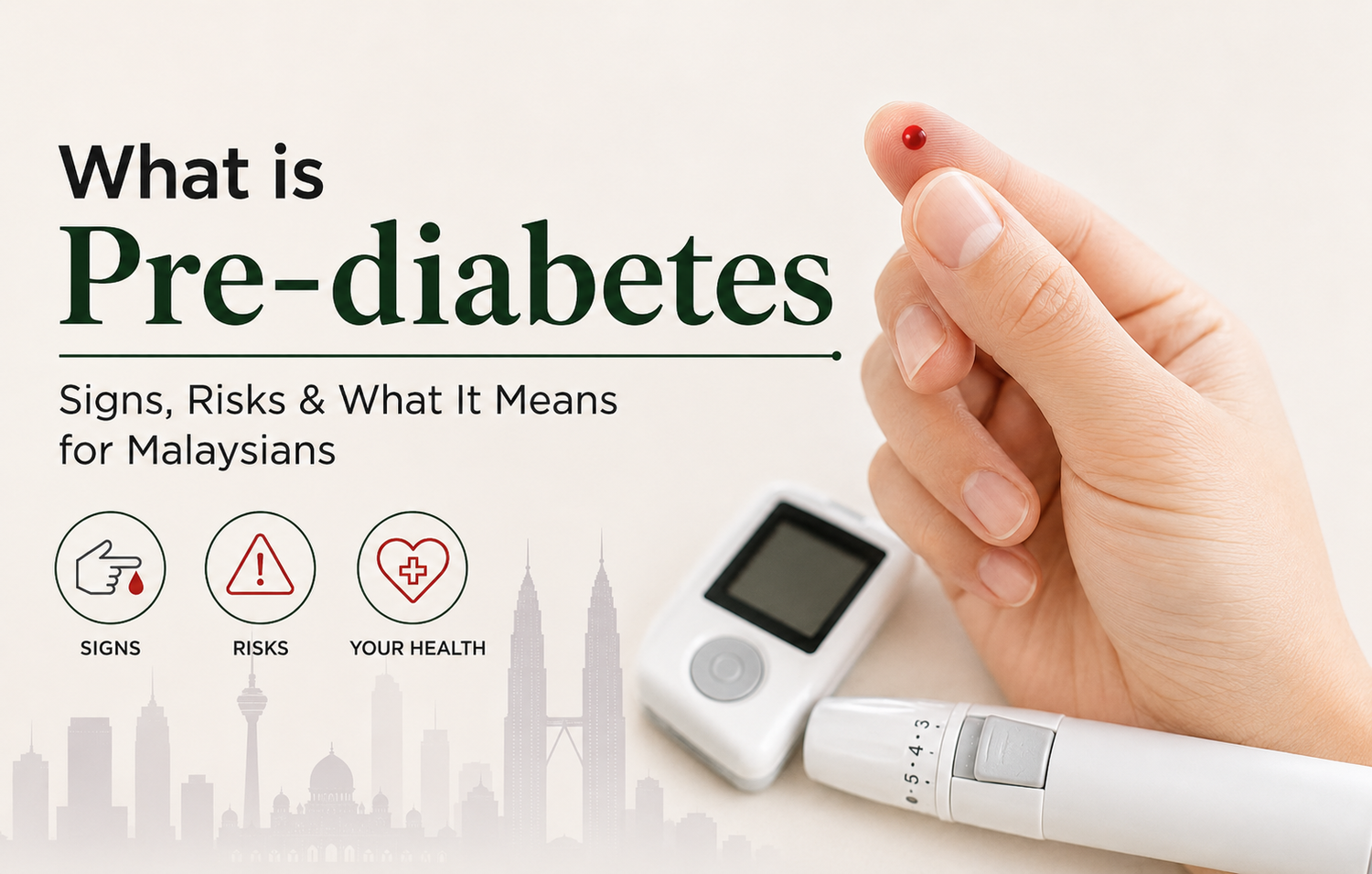
Pre-diabetes is a condition where your blood sugar is higher than normal, but not yet high enough to be diagnosed as Type 2 diabetes. It is a serious warning sign — and in Malaysia, it is far more common than most people realise. According to research published under the National Health and Morbidity Survey (NHMS), more than 11% of Malaysian adults have pre-diabetes, and many of them do not know it. The good news is that pre-diabetes is reversible. With the right lifestyle changes and natural support, you can bring your blood sugar back to a healthy range before it becomes full diabetes.
Why Pre-Diabetes Matters in Malaysia
Malaysia is facing a diabetes crisis.

The NHMS 2023 report found that 15.6% of Malaysian adults — nearly one in six — are living with diabetes. That figure has more than doubled over the past two decades. Behind those numbers is an even larger group: Malaysians with pre-diabetes who are on the path toward full Type 2 diabetes without realising it.
Several factors make Malaysians particularly vulnerable:
- Diet. Our daily staples — nasi lemak, roti canai, teh tarik, mee goreng — are often high in refined carbohydrates and sugar, which cause repeated blood sugar spikes throughout the day.
- Physical inactivity. The NHMS 2023 also found that one in three Malaysian adults is not physically active enough.
- Obesity. Over half of Malaysian adults (54.4%) are overweight or obese, according to the same survey. Excess body weight is one of the primary drivers of insulin resistance, the root cause of pre-diabetes.
- Family history. If a parent or sibling has Type 2 diabetes, your risk of developing pre-diabetes rises significantly. This is a genetic predisposition — not a certainty — but it means you need to be more vigilant.
The combination of these factors means that Malaysians aged 35 and above, especially those with a family history of Type 2 diabetes, are at real and growing risk.
What Exactly Is Pre-Diabetes?
Pre-diabetes means your body is struggling to manage blood sugar properly. Normally, when you eat, your blood sugar rises and your pancreas releases a hormone called insulin to bring it back down. In pre-diabetes, your cells have become less responsive to insulin — a state called insulin resistance. Your pancreas compensates by producing more insulin, but over time it cannot keep up. Blood sugar stays elevated.
Doctors diagnose pre-diabetes based on two common measurements:
| Test | Normal | Pre-Diabetes | Diabetes |
|---|---|---|---|
| Fasting blood glucose (mmol/L) | Below 5.6 | 5.6 – 6.9 | 7.0 and above |
| HbA1c (%) | Below 5.7 | 5.7 – 6.4 | 6.5 and above |
If your results fall in the pre-diabetes range, it does not mean diabetes is inevitable. It means your body is sending you a clear signal to act.
Signs and Symptoms of Pre-Diabetes
One of the most dangerous things about pre-diabetes is that most people have no symptoms at all. It is a silent condition. However, some people do experience early signs that are easy to dismiss as everyday tiredness or stress.

Common signs to look out for:
1. Unexplained fatigue after meals
Feeling unusually tired or sluggish after eating — especially after a carbohydrate-heavy meal — can be a sign that your body is not processing glucose efficiently.
2. Increased thirst and frequent urination
When blood sugar is elevated, your kidneys work harder to filter it, causing you to urinate more often and feel thirsty more frequently.
3. Darkened skin around the neck, armpits, or groin
A condition called acanthosis nigricans causes dark, velvety patches of skin in body folds. This is one of the physical markers of insulin resistance and is more commonly seen in people of Asian descent.
4. Blurry vision
Fluctuating blood sugar levels can cause temporary changes in your vision, particularly after meals.
5. Slow-healing cuts or bruises
High blood sugar affects circulation and the immune response, which can slow down the body’s natural healing process.
6. Numbness or tingling in hands and feet
Even at the pre-diabetes stage, slightly elevated blood sugar can begin to affect the small nerves in your extremities, causing a mild tingling sensation.
7. Increased hunger, even after eating
Because insulin is not working properly, your cells are not absorbing glucose well, leaving you feeling hungry even when you have just had a meal.
If you recognise two or more of these signs, speak to your doctor and ask for a fasting blood glucose or HbA1c test. A simple blood test is all it takes to know where you stand.
Who Is at Highest Risk?
You are at higher risk of pre-diabetes if you:
- Are aged 35 or above
- Have a parent, sibling, or close relative with Type 2 diabetes
- Are overweight, particularly with excess weight around the abdomen
- Are physically inactive (less than 150 minutes of moderate activity per week)
- Have a history of high blood pressure or high cholesterol
- Are of Malay, Indian, or Chinese ethnicity (Asian populations develop insulin resistance at lower BMI levels compared to Western populations)
- Have previously had gestational diabetes during pregnancy
Having one or more of these risk factors does not mean you will develop diabetes. It means you should take proactive steps now — before the condition progresses.
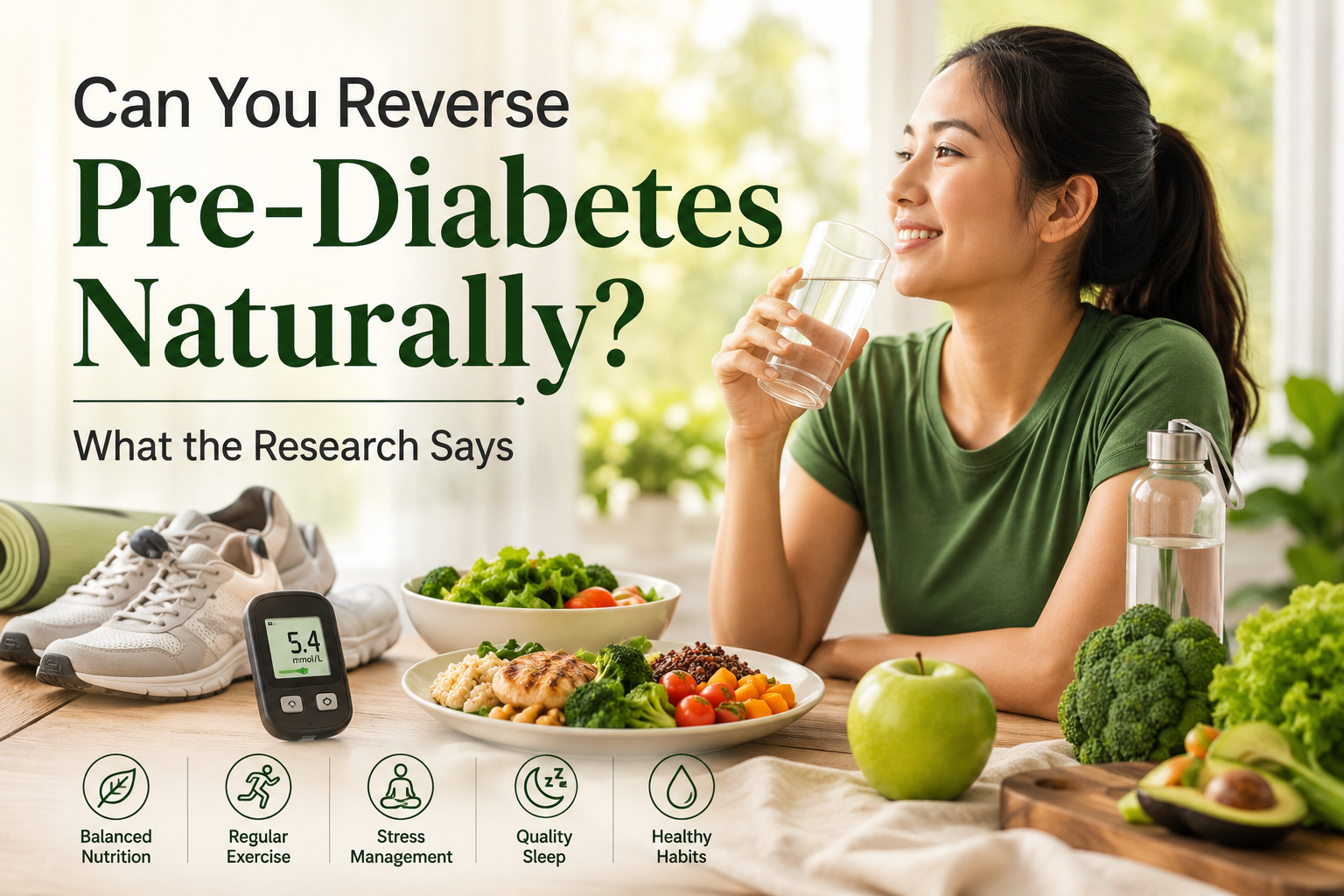
Can Pre-Diabetes Be Reversed?

Yes. This is the most important thing to understand about pre-diabetes.
Research consistently shows that lifestyle intervention can reverse pre-diabetes or significantly delay the progression to Type 2 diabetes. The Diabetes Prevention Program, one of the most widely cited studies on this topic, found that modest lifestyle changes — including a 5–7% reduction in body weight and 150 minutes of weekly physical activity — reduced the risk of progressing to Type 2 diabetes by 58%.
The three most effective natural strategies are:
1. Reduce refined carbohydrate intake
Swap white rice, white bread, and sugary drinks for lower-glycemic options. Brown rice, oats, and vegetables all produce a slower, gentler rise in blood sugar.
2. Move your body daily
Even a 30-minute brisk walk after dinner can lower your blood sugar. You do not need a gym membership — consistency matters far more than intensity.
3. Support your body with natural ingredients
Certain plant-based ingredients have been studied for their ability to support healthy blood sugar levels. One of the most well-researched is guava leaf.
Red Guava Leaf Tea: A Natural Support for Pre-Diabetics

Guava leaf has a long history of use in traditional Asian medicine for blood sugar management — and modern research is now backing this up.
A clinical study published in Nutrition & Metabolism found that drinking guava leaf tea with meals helped reduce post-meal blood sugar spikes and lowered HbA1c levels in subjects with hyperglycaemia. Separate research published in Frontiers in Pharmacology (2022) showed that guava leaf extract significantly lowered fasting plasma glucose levels and improved both glucose tolerance and insulin sensitivity.
The active compounds in guava leaves — particularly polyphenols and quercetin — work by slowing the breakdown of carbohydrates in the digestive tract, which prevents sharp glucose spikes after meals. They also help improve the body’s response to insulin, addressing the root cause of pre-diabetes.
TKT Nature Red Guava Leaf Tea is formulated specifically with red guava leaves, red guava pulp, and Cyclocarya Paliurus — a traditional Chinese herb known for its additional blood sugar and cholesterol-regulating properties. Together, these three ingredients make for a gentle, caffeine-free daily drink that supports glucose stability.
For pre-diabetics, 2 sachets daily — one in the morning and one in the evening after meals — can be a simple, sustainable addition to a healthier lifestyle.
Important note: TKT Nature Red Guava Leaf Tea is a complementary wellness product, not a medication. It is not intended to replace medical treatment for Type 1 diabetes or any condition requiring prescription medication. If you are on medication or have been diagnosed with diabetes, please consult your doctor before adding any supplement to your routine.
When Should You See a Doctor?
You should speak to a doctor or get a blood sugar screening if:
- You are aged 35 or above and have not had a blood test in the past year
- You have a family history of Type 2 diabetes
- You are experiencing any of the symptoms listed above
- You know you are overweight or physically inactive
Blood sugar screening is widely available at government kliniks, private clinics, and pharmacies across Malaysia. Many pharmacies offer free or low-cost HbA1c finger-prick tests. Knowing your numbers is the first step.
Frequently Asked Questions
What is the difference between pre-diabetes and diabetes?
Pre-diabetes means your blood sugar is elevated but has not yet crossed the threshold for a diabetes diagnosis. With lifestyle changes, pre-diabetes can be reversed. Full Type 2 diabetes is a chronic condition that requires ongoing management — though it can still be controlled very effectively.
Can pre-diabetes cause symptoms?
Most people with pre-diabetes have no symptoms at all, which is why it is often undetected. Some people experience fatigue, increased thirst, frequent urination, or darkened skin patches around the neck. The only reliable way to confirm pre-diabetes is through a blood test.
Is pre-diabetes the same as Type 1 diabetes?
No. Pre-diabetes is a stage that leads toward Type 2 diabetes, not Type 1. Type 1 diabetes is an autoimmune condition and does not have a pre-diabetes stage. Pre-diabetes is driven by insulin resistance — a lifestyle and genetic condition — which is why it responds well to natural and lifestyle interventions.
Can I reverse pre-diabetes naturally?
Yes, for many people, pre-diabetes is fully reversible through weight management, regular physical activity, a lower-glycemic diet, and natural support like TKT Red Guava Leaf Tea. Clinical research supports the effectiveness of lifestyle changes in reducing or eliminating pre-diabetes.
Who should not drink TKT Red Guava Leaf Tea?
TKT Red Guava Leaf Tea is not suitable for patients on kidney dialysis, those undergoing cancer treatment, pregnant women, or children under 15 years of age. If you have existing medical conditions or are on prescription medication, consult your doctor first.
How long does it take to see results from TKT Red Guava Leaf Tea?
Most TKT Nature customers report noticeable improvements in energy and blood sugar stability within 1 to 2 months of consistent daily consumption. Individual results vary depending on diet, activity level, and overall health.
Is there a pre-diabetes test I can do at home?
While you cannot definitively diagnose pre-diabetes at home, blood glucose monitors are available at most Malaysian pharmacies. A fasting reading consistently between 5.6 and 6.9 mmol/L warrants a visit to your doctor for a proper HbA1c test.
If my parent has Type 2 diabetes, will I definitely get it?
Not necessarily. Having a parent with Type 2 diabetes increases your risk, but it is not a certainty. Many people with a strong family history never develop diabetes by making proactive lifestyle choices early. Pre-diabetes screening from age 35 onwards is especially important if you have this family history.

- Pre-diabetes affects more than 11% of Malaysian adults — and most are undiagnosed.
- It is a silent condition: most people feel completely normal.
- Risk is higher for Malaysians aged 35+, those with a family history of Type 2 diabetes, and those who are overweight or inactive.
- Pre-diabetes is reversible with lifestyle changes, a lower-glycemic diet, regular movement, and natural support.
- Red guava leaf is scientifically supported as a complementary natural aid for blood sugar management.
- Get tested. A simple blood test could be one of the most important health decisions you make this year.
This article is for informational purposes only and does not constitute medical advice. Please consult a qualified healthcare professional for personal medical guidance.
Published by TKT Nature | tktnature.com

Leave a comment
This site is protected by hCaptcha and the hCaptcha Privacy Policy and Terms of Service apply.